

From the Sensex pack, Tata Motors, NTPC, Bajaj Finserv, Power Grid Corp, Titan, Asian Paints, IndusInd Bank, Maruti Suzuki India and Tata Steel were among the biggest gainers. Sun Pharmaceuticals, ITC, Hindustan Unilever, Bharti Airtel, UltraTech Cement and Reliance Industries were among the laggards.

'Marathwada is the suicide capital of Maharashtra.' 'To stop such man-made disasters, the government should immediately come up with a rightful package, not this charitable approach to compensation.'
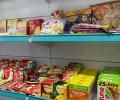
'In staples, we have still managed in rural areas.'

Stock markets will be driven by domestic inflation data, ongoing quarterly earnings from corporates and global trends this week, analysts said. News flows around the general election would also be tracked by investors, market experts said.

Benchmark equity indices Sensex and Nifty surged more than 1 per cent on Monday, registering their fifth day of rally on the back of buying in banking and IT shares after encouraging quarterly earnings and foreign fund inflows. The 30-share BSE Sensex jumped 855.30 points or 1.09 per cent to settle above the 79,000 mark at 79,408.50.

Stock markets will be driven by quarterly earnings by index majors, global trends and the RBI's interest rate decision this week after digesting news on budget proposals and US Federal policy outcome, say analysts. The trading activity of foreign investors and the movement of global oil benchmark Brent crude would also dictate trends in equities. "On the domestic front, the MPC (Monetary Policy Committee) meeting is scheduled from February 6-8.

About 55 banks participated in the deal, making it the largest bank group for a syndicated loan in Asia so far this year.

The report, 'Road Ahead Clears Up for Oil PSUs', says the decline in underrecoveries, or losses oil-marketing companies incur on selling petroleum products below market price, will have a significant positive impact on both upstream and downstream public-sector oil companies.
The government is likely to decide within the next two days whether to hike petrol and diesel prices to provide some relief to state-run oil marketing companies, Petroleum Minister Murli Deora indicated on Monday.

From the 30 Sensex companies, IndusInd Bank, Zomato, Larsen & Toubro, Titan, Mahindra & Mahindra, Bajaj Finance, Reliance Industries, Kotak Mahindra Bank, Tech Mahindra and Tata Consultancy Services were among the laggards. On the other hand, Power Grid, Hindustan Unilever, Infosys, Nestle India, Asian Paints, ITC, Sun Pharmaceuticals and ICICI Bank were the gainers.

The recent surge in crude oil prices could shave off the gains made by India Inc in profit margins in the past few quarters. Worse, it comes at a time when consumer demand in the country is slipping and major global economies are witnessing a slowdown. A back-of-the-envelope calculation suggests that the margin expansion accounted for three-fourths of the rise in the listed firms' operating profit between the April-June quarter (Q1) of FY23 and Q1FY24, and only a quarter of profits gains came from revenue growth.

The Reserve Bank of India's interest rate decision, macroeconomic data and global trends will drive investors' sentiment this week, with markets hoping to continue the positive momentum after ending FY24 on a buoyant note, analysts said. In addition, the trading activity of foreign investors, the rupee-dollar trend and the movement of global oil benchmark Brent crude would also influence trading in equity markets. The 30-share BSE Sensex climbed 14,659.83 points or 24.85 per cent in the 2023-24.

Equity markets may witness a gradual up-move this week with some volatility as both election and earnings season are nearing their end, analysts said, adding that global trends and trading activity of foreign investors would hold significance in dictating investors' sentiment. Benchmark indices, which had a record-breaking rally last week, would also track global oil benchmark Brent crude and the rupee-dollar trend. The monthly derivatives expiry on Thursday may also fuel volatility in markets.

From the Sensex pack, Zomato jumped over 7 per cent. ICICI Bank, Mahindra & Mahindra, Tata Motors, Larsen & Toubro, Asian Paints, Titan, Kotak Mahindra Bank and State Bank of India were among the gainers. However, Bajaj Finserv, Bharti Airtel, Tech Mahindra and Reliance Industries were the laggards.
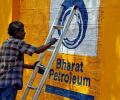
After HPCL, the government headhunter struggled to find a suitable candidate for the top job at Bharat Petroleum, as most applicants were narrow specialists lacking multidisciplinary experience needed to run a large organisation. The Public Enterprise Selection Board (PESB) last month interviewed a dozen candidates including BPCL director (finance) Vetsa Ramakrishna Gupta and its director (refineries) S Khanna but found none suitable for the job of chairman and managing director of Bharat Petroleum Corporation Ltd (BPCL), according to a PESB order.
The ongoing fourth quarter earnings season, global factors and macroeconomic data would guide the trends in the equity markets this week, analysts said. Markets would also take cues from trading activity of foreign investors, rupee-dollar trend and movement of global oil benchmark Brent crude. "Domestically, the next batch of Q4 earnings reports will drive stock-specific movements, Hero MotoCorp, Larsen & Toubro, BPCL, State Bank of India, Eicher Motors and Tata Motors are some of the big names in the list and the next phase of voting," said Pravesh Gour, senior technical analyst, Swastika Investmart Ltd.
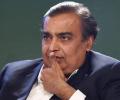
Billionaire Mukesh Ambani-promoted Reliance Industries Ltd (RIL) on Tuesday became the first listed company to hit the Rs 20 lakh crore market valuation mark. The market heavyweight's stock jumped 1.88 per cent to its record high of Rs 2,957.80 apiece on the BSE. It finally settled at Rs 2,928.95 per piece, up 0.90 per cent on the bourse.

Oil subsidies to fall 44% in FY15.

Come December, India may have to re-evaluate purchases of Russian oil if a price cap on crude oil proposed by the US and the European Union (EU) comes into effect. That impacts nearly a quarter of India's oil purchases that come at a discount, helping limit marketing losses for India's state refiners and enabling New Delhi to manage inflation by freezing pump prices of motor fuels. In September, India imported 1 million barrels a day or 24 per cent of its overall imports from Russia, which became the biggest supplier of oil to India.
A consulting firm has just released its annual ranking of the biggest oil and gas companies in the world.
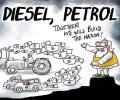
Petrol and diesel prices are unlikely to be increased despite firming raw material costs because of upcoming general elections next year, Moody's Investors Service said. Three state-owned fuel retailers -- Indian Oil Corporation (IOC), Bharat Petroleum Corporation Ltd (BPCL) and Hindustan Petroleum Corporation Ltd (HPCL) -- which control roughly 90 per cent of the market, have kept petrol and diesel prices on freeze for a record 18 months in a row. This is despite the raw material (crude oil) cost surging last year, leading to heavy losses in first half of 2022-23 fiscal year before easing oil prices propelled them to profitability.

The prohibition has freed up as much as 60 million litres of ethanol
State-owned Indian Oil Corporation is "ready" to buy out the government's balance 26 per cent stake in the oil marketing company IBP and make it a 100 per cent owned subsidiary.

The point to note for India is that we must not panic. The United States may be our largest export destination, but high tariffs will not exactly mean gloom and doom. Sure, we can throw some morsels as we continue negotiating, but we must be firm that some red lines cannot be crossed, no matter what, asserts Shreekant Sambrani.

Financials declined amid profit taking while energy shares fell after the government hiked excise duty on transport fuels.

Homegrown fast-moving consumer goods (FMCG) major Dabur India is set to record low single-digit growth in consolidated revenue in the December quarter, it said in an update on Friday. The maker of Hajmola candy and Real fruit juice said rural consumption continued to be resilient and grow faster than urban in the third quarter.

According to estimates, if the companies are not allowed to raise petrol rates at least Rs 5 a litre by the first fortnight of September, they might begin to suffer underrecoveries on this decontrolled auto fuel, too -- for the first time this financial year.

The market capitalisation of BSE-listed companies soared to an all-time high of Rs 406.52 lakh crore on Monday thanks to a rally in equities where the BSE Sensex climbed over 1 per cent. The 30-share BSE Sensex rallied 941.12 points or 1.28 per cent to finish at 74,671.28. During the day, it zoomed 990.99 points or 1.34 per cent to 74,721.15.
The first phase of SMOs was undertaken by RBI in June last year. The second phase, which began in November 2008, ended in the first week of January this year. Under the arrangement, RBI bought oil bonds from these companies and issued them dollars to import oil. Other than the RBI, the Life Insurance Corporation of India is another major subscriber to such bonds and certain quantities are also traded in the market.
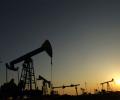
Experts say local demand, government policies in retail and refining sector are attracting foreign players.

Among the 30 Sensex companies, Mahindra & Mahindra, Titan, HDFC Bank, Reliance Industries, UltraTech Cement, Bajaj Finance, Axis Bank, Tata Motors and Asian Paints were the biggest gainers. On the other hand, Tech Mahindra, Tata Consultancy Services, Wipro, HCL Technologies, Larsen & Toubro and State Bank of India were among the major laggards.
Funds dry up owing to liquidity crunch, high debt.

Adani is the fastest growing energy company in Asia-Pacific and the second fastest in the world
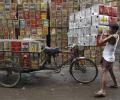
Major edible oil companies, including Adani Wilmar and Ruchi Soya, have reduced the maximum retail price (MRP) of their products by 10-15 per cent to provide relief to consumers, industry body SEA said on Monday. The prices have been reduced by Adani Wilmar (on Fortune brands), Ruchi Soya (Mahakosh, Sunrich, Ruchi Gold and Nutrella brands), Emami (Healthy & Tasty brands), Bunge (Dalda, Gagan, Chambal brands) and Gemini (Freedom sunflower oil brands), it said. OFCO (Nutrilive brands), Frigorifico Allana (Sunny brands), Gokul Agro (Vitalife, Mahek and Zaika brands) and others have also reduced prices, it added.
